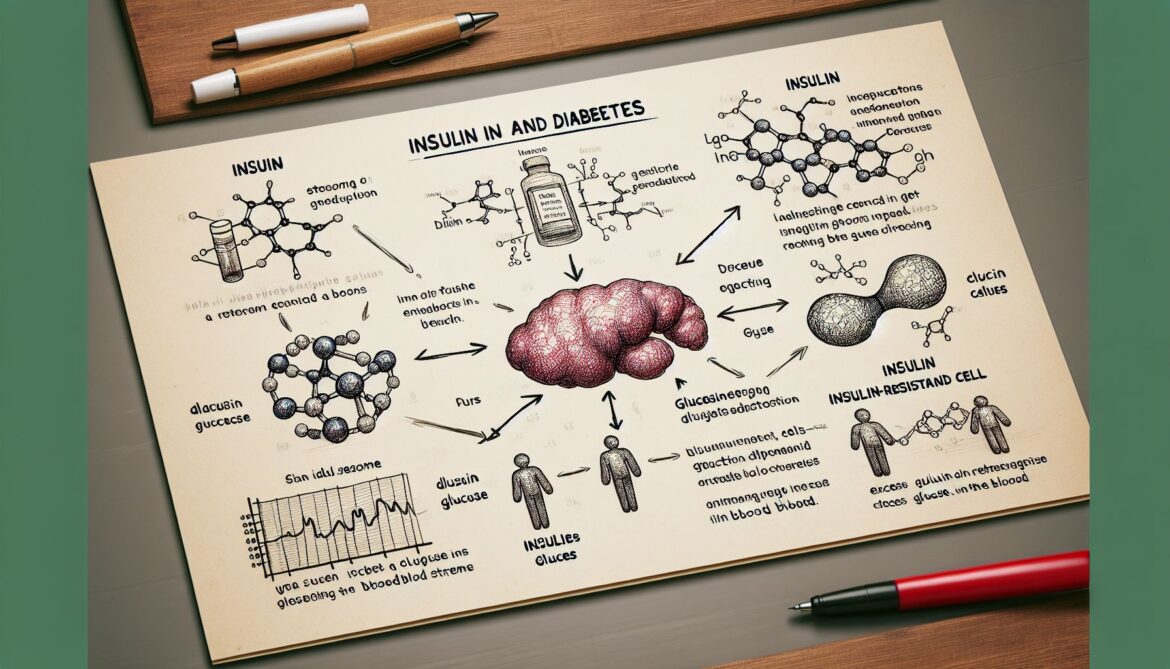
Diabetes, a disease affecting millions of people worldwide, has become a significant health concern in recent years. According to the International Diabetes Federation, an estimated 463 million adults were living with diabetes in 2019. As public awareness grows, understanding the underpinnings of diabetes is key to managing the disease. One of the most integral parts of this understanding is insulin, a hormone produced by the pancreas associated closely with diabetes management. This article takes a thorough look at the relationship between insulin and diabetes, emphasizing the crucial role insulin plays in managing blood glucose levels, understanding the difference between type 1 and type 2 diabetes, and strategies for dealing with insulin deficiency or resistance.
The Fundamental Role of Insulin
Under normal circumstances, insulin’s primary role within your body is to regulate your blood’s glucose levels. Indeed, after consuming food, the carbohydrates you’ve ingested are broken down into glucose in the digestive tract. This glucose is then released into the bloodstream, signaling the pancreas to produce insulin. By binding with specific cells, insulin allows glucose to be absorbed and used as energy, thus avoiding potentially dangerous blood sugar spikes.
Inadequate production or use of insulin can lead to one of two chronic ailments: Diabetes type 1 and type 2. Both are marked by issues regulating blood glucose levels, though they have differing causes and treatments.
Insulin and Type 1 Diabetes
An autoimmune disease, Type 1 diabetes, results in the immune system wrongfully attacking and permanently disabling the insulin-producing cells in the pancreas. Per the Centers for Disease Control and Prevention, this type affects about 5% to 10% of people with diabetes.
As a result, those with type 1 diabetes must rely on artificial insulin therapy for their bodies. They are generally guided by the objective to match insulin intake with food consumption as closely as possible. Despite advancing technology, accurately accomplinating this can still be quite challenging and places individuals with type 1 at risk for hypoglycemia, a potentially deadly state of lowered blood glucose.
Type 2 Diabetes and Insulin Resistance
Whereas Type 1 diabetes is primarily due to insulin deprivation, Type 2 diabetes differs. This type, affecting anywhere from 90% to 95% of those diagnosed with diabetes, is usually instigated by the emergence of insulin resistance ––the body stops responding adequately to insulin’s signals, and glucose remains unnecessarily in the bloodstream, causing high sugar levels.
The exact cause of insulin resistance is unknown, though several factors, including weight and inactivity, make the defining conditions promonent. Initially, the pancreas produces an abundance of insulin to make up for body’s poor insulin sensitivity. However, over time, the pancreasworks too hard and ultimately can’t keep pace with this concerningly high demand, leading to type 2 diabetes.
Accounting for measures to stem insulin resistance, lifestyle is usually the primary influence. A balanced diet, aerobic exercise, and weight control can reduce insulin demand and fundamentally increase insulin sensitivity.
Insulin Types and Administration
In managing both diabetes types, insulin therapy involves a delicate act of balance the requisite amount of insulin needed to effectually keep glycaemia in the green zone. However treatment nascent methodologies based on specific needs vary. For instance, insulin administered varies on its origin – usually human, synthetic, or analog.
There’s rapid-acting insulin which is consumed right on diet; regular or Short-acting that must be taken half hour or an_hour before feasts; Intermediate-acting useful for those who need not constant blood filter but are inarticulated for time-sensitive and long-acting that gives day-long or even all-night inference.
The speed of different insulins, together with their lifespan, combine to make diverse effects and can pair to accommodate individual feedback – all keeping blood sugar neutral with lesser ministartions as potential. Despite the demand for consistent control with insulin-initiated diabetes, gross stands have given rise to much advanced insuline carriage incorporating pen-line deliverance ranged teaching-IQ unaffectness within phones with digital apps.
Looking forward
As an increasing part of the world faces the reality of diabetes, understanding the disease has never been more important. A solid grasp of insulin’s role, as described above, is vital in this context. With greater knowledge of insulin and its interaction with glucose, more effective treatment practices can be developed, helping millions manage their condition.
Still, the continued investigation of both insulin’s role in the body and advancements relating to treatment is imperative. This ongoing data-led exploration not only acts as avenue for antidote discovery, but fosters available patient awareness.
Alongside diet and lifestyle changes, attaining control over this disease saxophone requires holistic multidimensionary avenues far ahead lightyears ahead of what we have right now, while we continue ground-deeping human mysteries within vast bounds.